

Overview
Launched in September 2019, the iPhone 11 brought flagship features to a more accessible price point. The 6.1″ Liquid Retina LCD offers natural colors and True Tone adjustments, while the A13 Bionic chip delivers zippy app launches, smooth gaming, and long-term software support. With iOS’s seamless ecosystem, Face ID security, and two‑day battery life under moderate use, the iPhone 11 continues to outshine many newer mid‑range rivals.
Main Features
| Feature | Specification |
|---|---|
| Camera | Dual 12 MP system: Wide (f/1.8) + Ultra‑wide (f/2.4, 120°). Night mode, Portrait mode, and 4K 60fps video recording. |
| Operating System | iOS 13 is upgradable through iOS 16 and beyond, featuring Face ID, App Library, and privacy-first updates. |
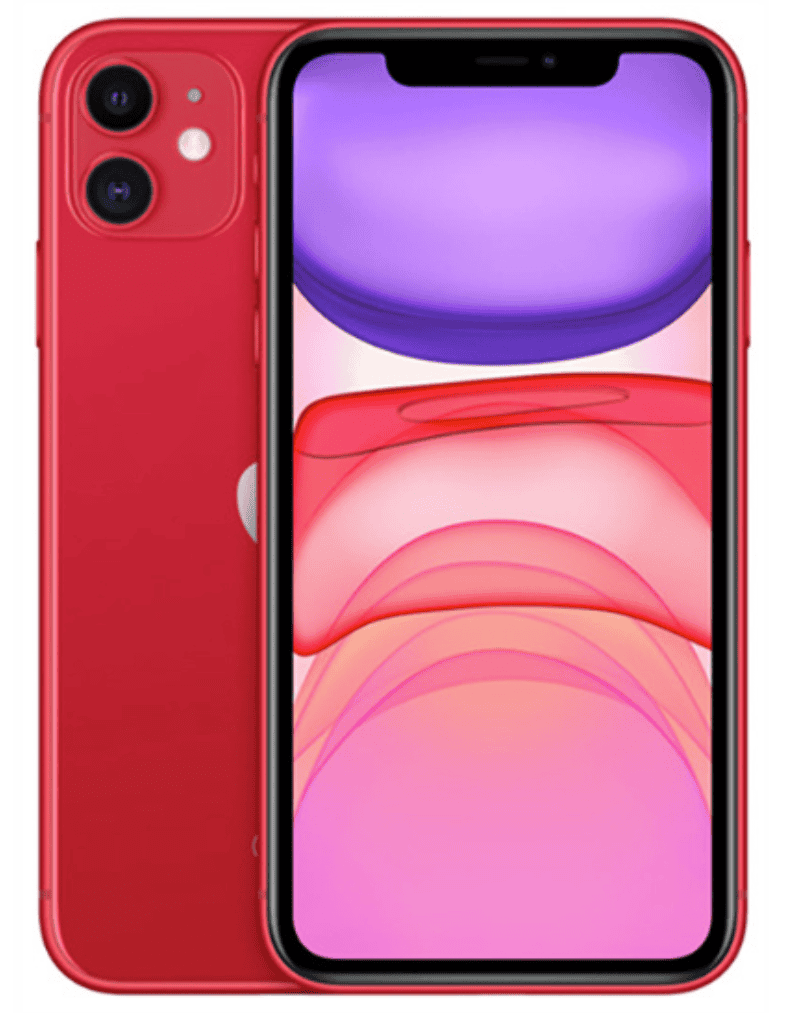
| Available Colors | Purple, Yellow, Green, Black, White, (PRODUCT)RED—with durable glass and aluminum frame. |
| Media Capabilities | 6.1″ Liquid Retina LCD at 828×1792 px, True Tone, Dolby Vision HDR playback, spatial audio support. |
| Sensors | Face ID (TrueDepth camera), accelerometer, gyro, proximity, ambient light, barometer, dual‑SIM (nano + eSIM). |
| Battery & Charging | 3110 mAh battery, up to 17 hrs video playback, 18 W fast‑charging (50% in 30 min), Qi wireless charging. |
In‑Depth Feature Analysis
Camera Versatility
The iPhone 11’s dual-lens setup lets you switch between wide and ultra-wide perspectives seamlessly. Night mode utilizes the Ultra-Wide sensor for capturing dramatic low-light shots, while Portrait mode produces natural bokeh with advanced depth mapping. Video aficionados benefit from 4K 60fps across both rear lenses and the front-facing camera, plus cinematic stabilization for smooth footage.
Performance & Software Longevity
The iPhone 11, available in 4GB, 64GB, and 128GB models, is powered by the A13 Bionic. This processor enables the iPhone 11 to handle graphics-intensive games and AR apps with ease. Apple’s chip-and-software integration ensures consistent performance and provides over five years of OS updates, outpacing most Android competitors in longevity and security patching.
Display & Multimedia
The True Tone Liquid Retina display adapts to ambient lighting for comfortable viewing. Although it’s an LCD rather than an OLED display, it still delivers accurate color reproduction and reaches up to 625 nits of peak brightness. Dolby Vision and spatial audio support elevate streaming on Apple TV+, Netflix, and YouTube.
Build Quality & Design
With IP68 water resistance, a toughened glass front and back, and an aluminum frame, the iPhone 11 feels premium and sturdy. The array of vibrant finishes—especially the gradient‑effect Green and Purple—offers a fresh take on Apple’s classic design language.
Sensors & Connectivity
Face ID remains the most secure facial recognition system on smartphones. The inclusion of dual-SIM (nano + eSIM) support, UWB (Ultra-Wideband), and Wi-Fi 6 ensures future-proof connectivity. Essential sensors, such as ambient light and a barometer, enhance the user experience with adaptive brightness and fitness tracking.
Pros and Cons
Pros:
-
Outstanding performance with A13 Bionic and long‑term iOS updates
-
Versatile dual‑camera with Night mode and Ultra‑wide shots
-
Premium build: IP68 water resistance, durable glass + aluminum
-
Face ID security and seamless iOS ecosystem integration
Cons:
-
LCD panel lacks the true blacks of OLED
-
No 5G support
-
Single‑day heavy-use battery life under intense gaming or video calls
Conclusion
The iPhone 11 remains a stellar value in 2025, offering flagship-grade cameras, powerhouse performance, and Apple’s ecosystem at a mid-range price of PKR 140,999. For anyone seeking a future-proof device with exceptional video recording capabilities, durable build quality, and long-lasting software support, the iPhone 11 remains one of the smartest buys in Pakistan’s smartphone market.